Japanese knotweed: how do you get rid of it?
Why Japanese knotweed is so persistent, what Belgian law has said since 2025 and the methods that really work in a garden.
A fence marks out your land, gives you privacy and keeps the children or the dog inside. Before choosing a model, it is best to know the rules, which differ from one region to another.
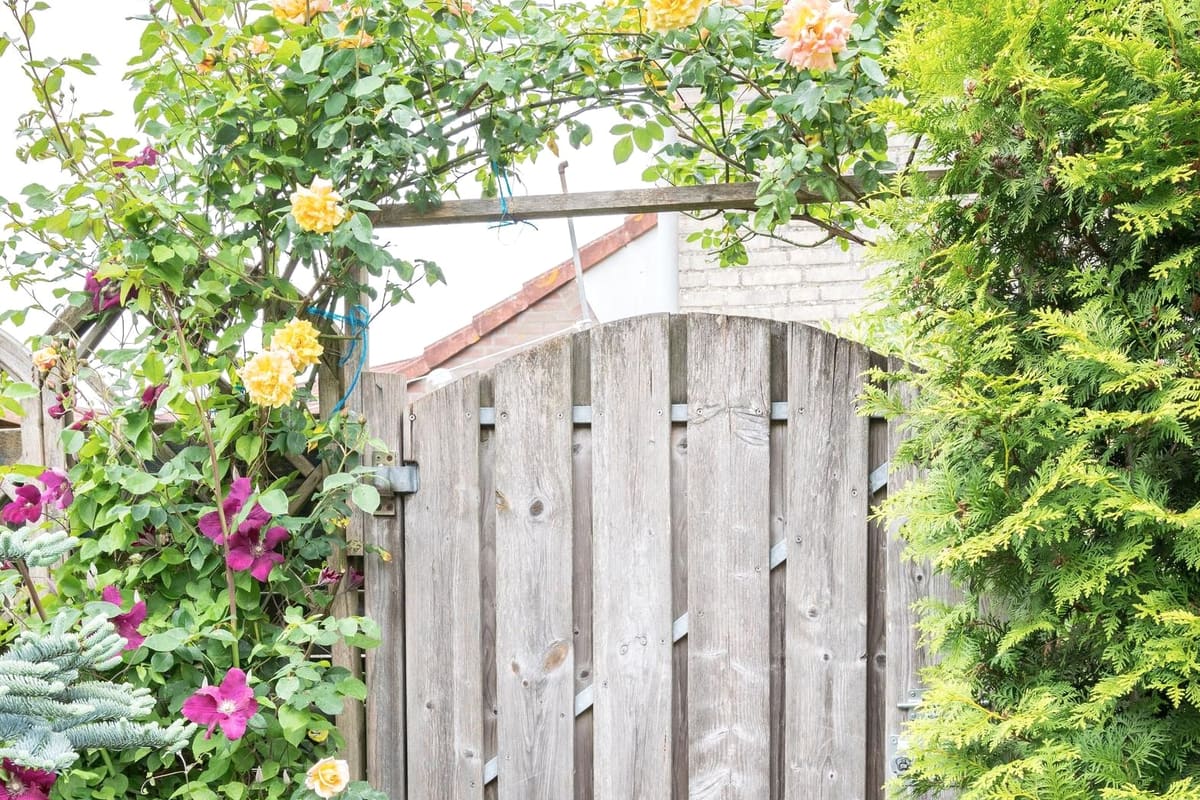
A fence is exempt from planning permission up to 1 m high in the front setback zone, in front of the house, and up to 3 m in the courtyard and garden zone, subject to certain conditions on size. Above that, or for a protected heritage property, planning permission is required.
The Walloon Code of Territorial Development (CoDT) provides a simplified regime for fences up to 2 m high made of posts and wire or mesh, possibly set on a low wall of no more than 0.70 m, as well as for certain wooden fence panels and gabions.
Since 1 May 2025, however, a fence in a high flood risk zone requires planning permission. Your municipality’s planning department will confirm which rule applies to your land.
Fences up to 2 m high are exempt from planning permission in the side and back garden, within 30 m of the house. At the front, a closed fence is limited to 1 m. These exemptions do not apply in so-called vulnerable areas, or if a subdivision permit (permis de lotir) provides otherwise.
Everywhere in Belgium, a subdivision permit (permis de lotir) or a municipal regulation can impose a height, a material or a colour, and these rules take precedence. A call to your municipality’s planning department before work starts avoids unpleasant surprises.
Since 1 September 2021, the Civil Code has presumed that walls, fences and hedges on the boundary are in shared ownership (mitoyenneté), unless proven otherwise. A party fence is decided on and paid for jointly, and if one of the two plots is built on, each neighbour can ask the other to share the costs.
To remain the sole owner of your fence, simply place it entirely on your own land.
We check with you the rules that apply to your land, then install the fence with foundations suited to the soil and, if you wish, a matching gate or side gate.
This article gives general guidance. Rules change and can differ between municipalities: always check with your municipality before starting work.
Fences, gates and animal enclosures, installed straight and firmly anchored.
Formative and maintenance trimming of hedges, shrubs and topiary, with green waste removed.
Garden sheds, timber cabins, pool houses and chill-out areas, from the base to the finishing touches.
Why Japanese knotweed is so persistent, what Belgian law has said since 2025 and the methods that really work in a garden.
Hydrangeas and roses are not all pruned the same way. The right time and technique for each variety, for a garden in bloom all summer.
When to sow a lawn in Belgium, when to choose turf instead, and how to prepare the soil and water for a dense lawn from the very first year.
Pros and cons of cherry laurel, thuja and native mixed hedges, distances to keep from your neighbour and the hedge planting grant in Wallonia.
Glyphosate, salt, vinegar: what the law allows householders in Brussels, Wallonia and Flanders, and effective methods for paths and patios.
The best times to trim a hedge in Belgium, the species that need special care, and the bird nesting season to respect.
Standard trees, planning permits, maintenance versus radical pruning, the restricted period: what to know before felling or pruning a tree in Brussels.
Moss, thatch, patchy grass: when to scarify your lawn in Belgium, how to go about it and what to do right after for a dense lawn.
Tell us about it in two minutes. We will get back to you quickly to arrange the visit, Monday to Saturday.
This website sets no advertising or tracking cookies. With your consent, we load the mood videos on the home page from Cloudinary, which then receives your device’s IP address. Without consent, a photo is shown instead. Cookie policy